Understand the benefits of selling your home before buying a new one, especially in today’s market with extended selling times.

As a homeowner preparing for a transition, the central question often becomes: Do I buy a new home before selling my current one, or should I sell first?
The answer isn't straightforward; it depends on your financial situation, local market conditions, and your personal timeline. In this market, however, there appear to be substantial advantages to selling first.
Benefits of Prioritizing Your Sale
In current conditions, selling your home first typically reduces the complexity of the move. With an influx of homes on the market and fewer buyers, listings are lingering longer than they have in previous years. The saturation of the market creates an environment where sellers must be strategic, as their property can be easily overlooked in a sea of options. This means that, if you choose to sell first, you might save yourself a lot of headaches down the road.
1. Avoid the Burden of Dual Mortgages
Opting to buy a new home before selling your existing one can lead to the stress of managing two mortgage payments. Especially given that homes are taking longer to sell, you could find yourself juggling mortgage obligations, potentially stretching your finances thin. Paying for two places at once is not just a stressor; it’s a significant financial risk, especially if the market shifts unfavorably during this period. By selling first, you eliminate this risk, simplifying your financial responsibilities. As Ramsey Solutions puts it:
“It’s best to sell your old home before buying a new one to avoid unnecessary risks and possible headaches.“
2. Leverage Your Equity Effectively
One of the significant advantages of selling first is gaining a clear understanding of your financial position. Equity—the difference between your home’s value and your mortgage balance—plays a crucial role here. Homeowners who have held their properties for five years typically see an average equity of around $180,000, while those in their homes for six to ten years can accrue over $340,000. This accumulation isn’t just a number; it represents potential leverage in your next move in the housing market. Once your current home sells, you can apply that equity toward your next down payment or even purchase your new residence outright. This offers a sense of financial freedom that's difficult to achieve otherwise.
3. Strengthened Purchase Offers
When your existing home is sold, it strengthens your position as a buyer. You can make offers without the contingency of selling your current home, a move that's particularly attractive to sellers who favor quick, straightforward transactions. This gives you a competitive edge, especially in a market where buyers face stiff competition. Consider the seller's perspective: a solid offer without contingencies becomes more appealing, particularly for properties that have been sitting on the market for some time. In these situations, you’re not just another buyer; you're a more desirable prospect because your offer is cleaner and less risky. This scenario allows you more negotiating power for terms like repairs when you have a motivated seller who would prefer to finalize a deal rather than risk holding out for additional offers.
Weighing the Downsides
While selling first has clear advantages, it also brings certain challenges. A quick look at the pros and cons can help guide your decision. The pressure to find a new home before your closing date can be overwhelming. It often leads homeowners to rush their next purchase, which can result in regretting the decision down the line.
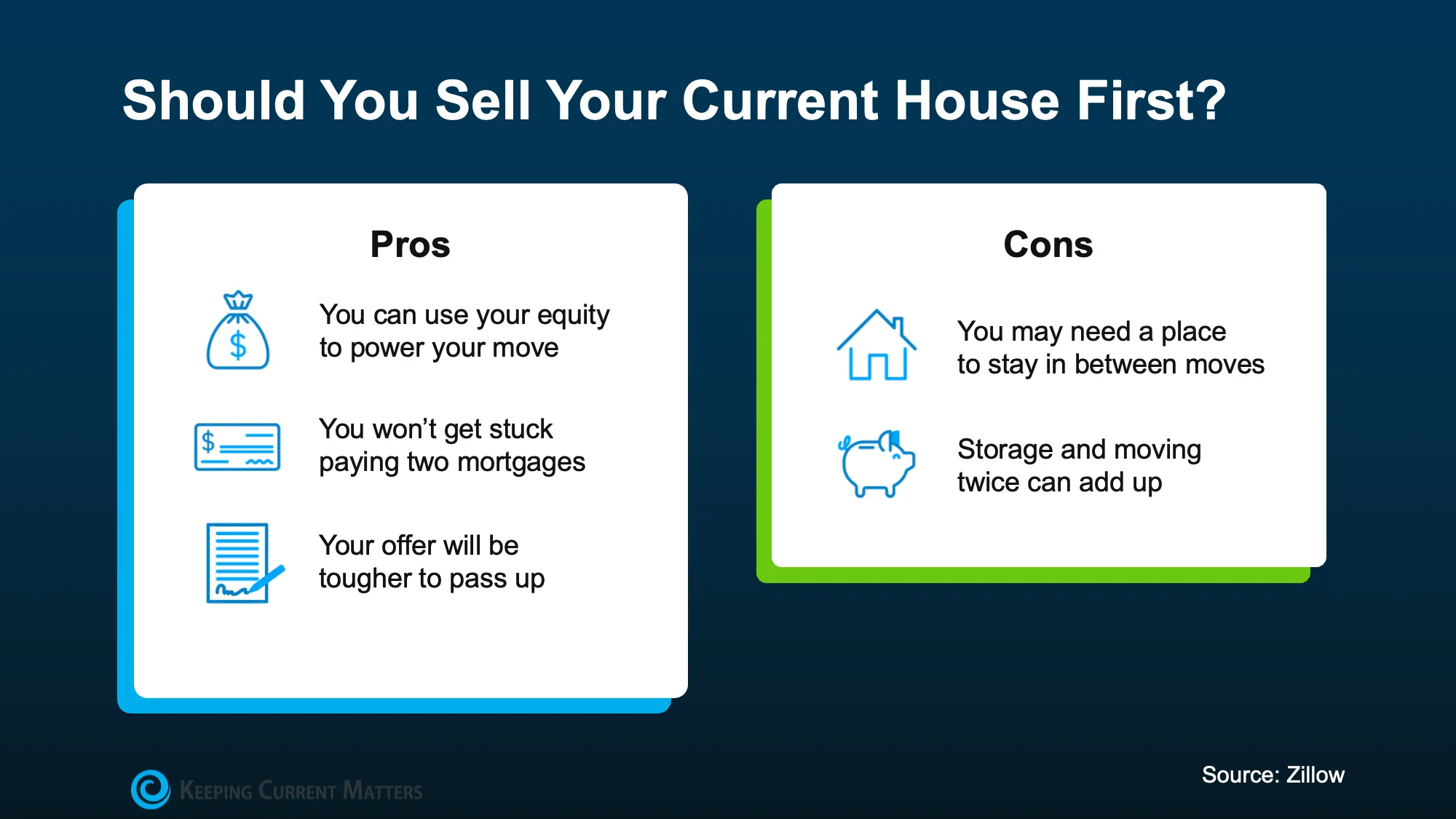
Addressing the cons is manageable with careful planning. Collaborate with your real estate agent to explore solutions such as a rent-back agreement, which allows you to remain in your home for a predetermined time after closing. Such arrangements can buffer the transition and alleviate the stress often associated with such a significant life shift. Flexible closing dates are another tool in your arsenal, providing you with the breathing space you need to find the right new home without feeling rushed.
Looking Ahead
There’s no universal approach to managing the simultaneous buying and selling of homes. Yet, for many homeowners, leading with the sale alleviates stress and maximizes financial advantage. Not only does it clear the way to better financial footing, but it also provides a clearer vision of how you want to approach your next purchase.
If you're working in this space, engaging with a local real estate agent is crucial to navigating these complexities confidently. They can arm you with a wealth of local market knowledge and personal insights, allowing you to make informed decisions that align with your goals.
Future Outlook: Navigating Market Changes
What lies ahead for the real estate market is uncertain, influenced by myriad factors ranging from interest rates to economic conditions. Homeowners need to remain agile and informed. As market dynamics shift, the advantages of selling first may vary, but the principle of financial prudence will likely hold firm. Knowing when to sell becomes an art—one that requires keen awareness of both personal and market conditions. This isn't just about homes; it's about your financial future.
Discussion
Sign in to join the discussion.