Brightline West seeks a crucial $6 billion federal loan to secure funding for its high-speed rail project linking Las Vegas and Southern California.
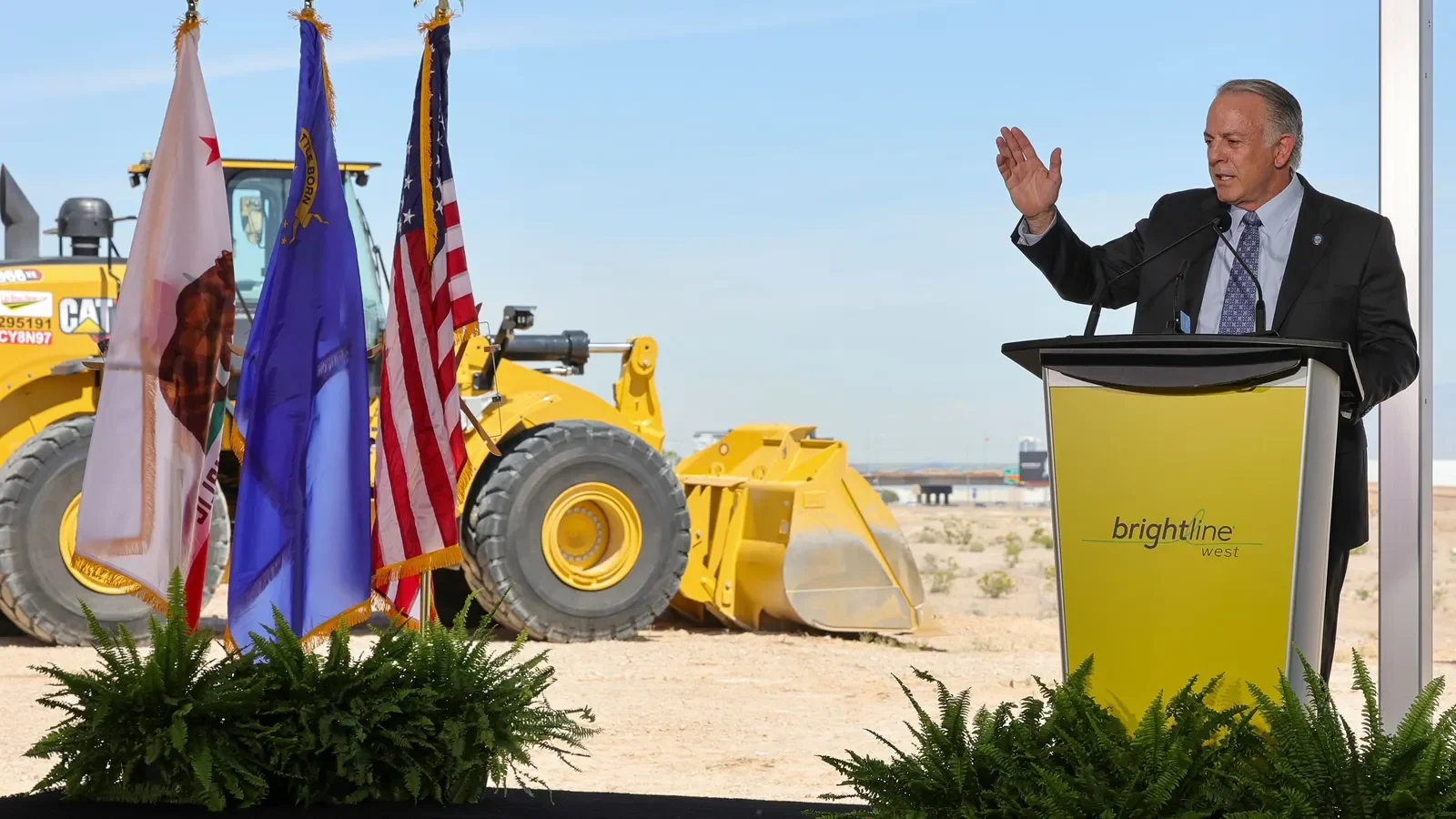
Brightline West, aiming to connect Las Vegas with Southern California via high-speed rail, faces a pivotal moment as it seeks a $6 billion federal loan. As the deadline of November 2 approaches for a crucial $400 million equity investment, project financing hangs in the balance. This high-speed rail initiative is positioned as more than just a transportation project; it symbolizes the potential for revolutionizing travel in a region that's experienced rapid growth and escalating traffic congestion.
Funding Challenges and Future Prospects
Industry observers are focusing closely on the Railroad Rehabilitation and Improvement Financing program, which provides low-interest loans for critical rail infrastructure. Success in securing these loans could be the linchpin for Brightline West's future, as investors are increasingly wary amid rising project costs. With anticipated expenses skyrocketing, the reliance on federal funding isn't just preferable—it's becoming essential.
Compounding these financial pressures, Brightline's sister project in Florida has encountered significant hurdles, including missed bond payments that have raised concerns about the project's viability. This situation paints a troubling picture; potential investors are increasingly wary of backing projects linked to Brightline due to these financial setbacks. Analysts suggest that reliance on traditional private investment models may not be tenable, indicating a likely shift toward greater dependence on federal funding. Otherwise, the prospects for Brightline West look grim. If you're working in this space, this trend warrants close attention.
Alon Levy, a fellow at the NYU Marron Institute, suggests that Brightline West might need to pivot its funding strategy significantly. "Private-sector plans aren’t really workable," he noted in a recent correspondence, hinting at a growing expectation for increased federal involvement to move the project forward. His assertion raises a critical point: will public funds be sufficient to fill the significant gaps left by private investment? Given the shifting sands of economic feasibility, the answer remains unclear.
Comparative Context within High-Speed Rail Initiatives
Looking at similar cases, the California High-Speed Rail Authority is scrambling to secure financing for its ambitious projects, needing about $126 billion to complete enhancements between San Francisco and Los Angeles. With just over $39 billion funded or projected through 2045, an $87 billion shortfall persists. The numbers here are underwhelming, and what this means for stakeholders is sobering.
The California initiative has sought innovative solutions, evidenced by a co-development agreement earlier this year with a consortium aiming to attract private investors for project funding. However, challenges loom as the authority risks depleting its resources by late 2027 if it cannot leverage future funding. It's a precarious situation that highlights broader systemic issues within high-speed rail planning in the U.S. However, if successful, these innovative strategies might provide a roadmap for Brightline West and other projects struggling with financial uncertainties.
Implications and Future Outlook
The prospects for high-speed rail in the United States hinge heavily on the ability of projects like Brightline West to secure necessary funding. The implications of successful federal backing extend beyond just transport; they touch upon broader economic development and environmental goals aimed at reducing reliance on fossil fuels and alleviating urban congestion. Yet, the continuing difficulties suggest that such optimism may be unwarranted.
If Brightline West falls through, the ramifications could deter future investments in high-speed rail within the U.S., shifting focus back to traditional modes of transportation. The challenges faced by the California project bolster this apprehension, as it sets the precedent for future initiatives. The story of high-speed rail in America thus becomes not just a tale of trains and tracks, but one of finance, policy, and, crucially, political will. Are policymakers ready to prioritize these projects, or will they continue to languish without the support they need?
As stakeholders monitor the unfolding situation with Brightline West, the outcome may shape the narrative surrounding high-speed rail in the country for years to come. There's a palpable tension in the air as the clock ticks down to the deadline. Whether or not the federal loan materializes could either launch a new era in transportation or lead to an enduring disappointment.
Discussion
Sign in to join the discussion.