August saw enhanced activity in most commercial sectors, even as data center planning cooled, according to the latest Dodge Construction report.
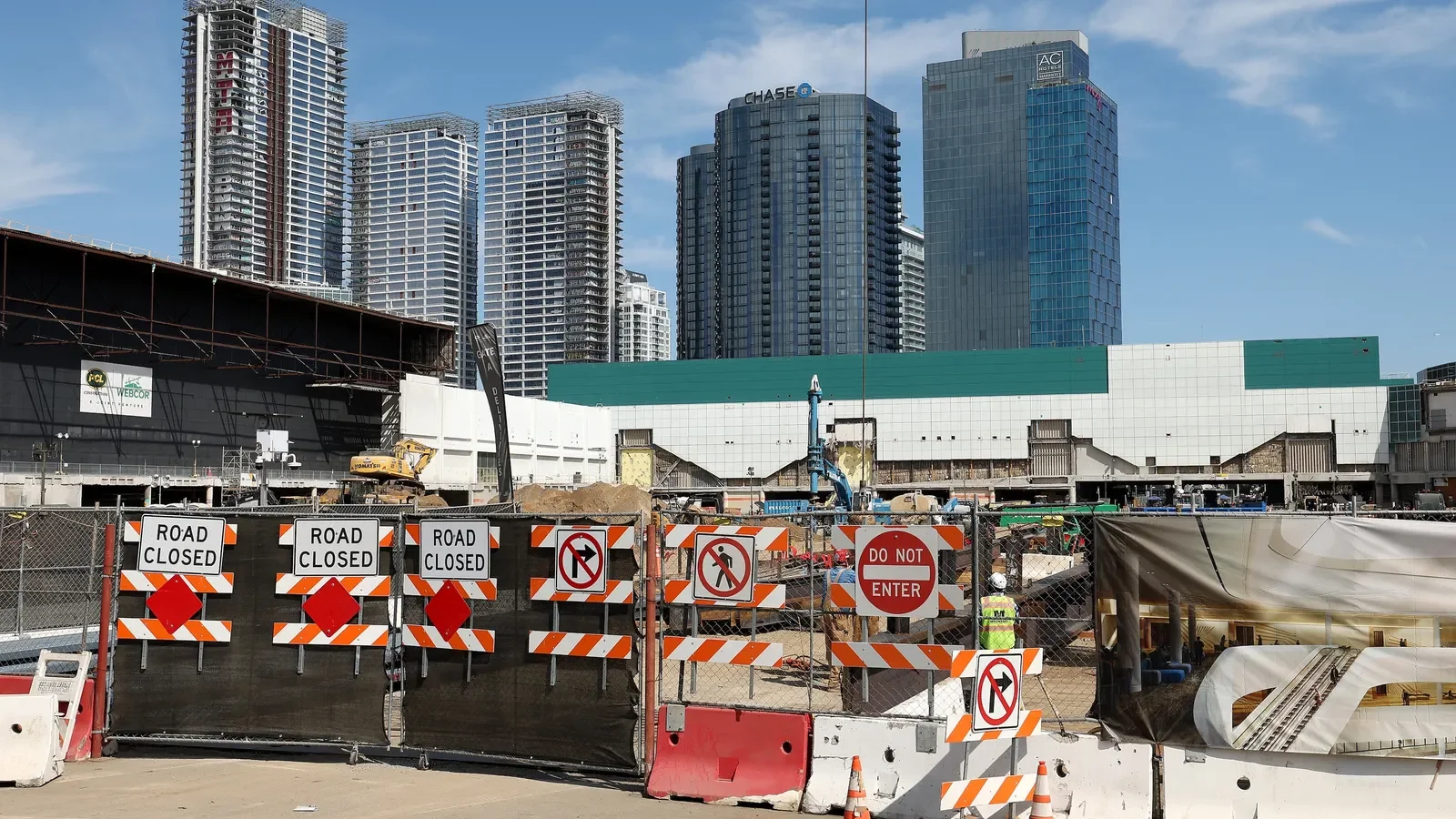
Data center planning experienced a downturn in August, while various commercial sectors demonstrated notable acceleration, reflecting a diversified growth pattern, according to the latest findings from Dodge Construction Network.
The Dodge Momentum Index, which tracks nonresidential construction projects entering the planning stage, dropped by 0.4% month-over-month. This minor dip follows a significant 6.9% increase in July, which was bolstered by robust data center activity.
“The overall momentum in planning for August remains quite broad-based,” commented Sarah Martin, director of economic research at Dodge Construction Network. She noted, “While the weaker data center segment drove a flatter trend, most other sectors are witnessing a positive uptick in planning efforts.”
Sector Performance Overview
Certain commercial domains, particularly office and hotel construction, showed significant improvements in planning from the previous month. While there’s often a seasonal pattern to construction planning, this persistence suggests resilience in these markets. The increase can be attributed to a heightened demand for office space as companies adjust to hybrid models, and a resurgence of travel and tourism boosting hotel developments. Moreover, institutional projects, including those in education and public buildings, also recorded gains in August, highlighting a varied recovery across sectors that indicates a renewed investment in public infrastructure and community services.
Conversely, planning figures for retail and warehouse construction declined. The shift away from physical retail spaces has been a growing trend, likely accelerated by the ongoing impact of e-commerce. And while warehouse spaces had seen a boom due to the surge in online shopping, this month’s softening suggests that demand may be starting to stabilize. A slight reduction also occurred in the healthcare sector following several months of consistent growth, which raises questions about future investment in medical facilities amid uncertainty regarding federal funding and healthcare policy.
Despite the slowing activity in data centers, the year-over-year comparisons remain favorable. The Dodge Momentum Index is up 4.2% relative to August 2025, with both commercial and institutional planning reports showing increases of 2.3% and 7.8%, respectively. This broadening of growth reflects a recovery dynamic that some industry observers argue could indicate stability in the face of potential economic pressures.
Impact of Data Centers on Commercial Planning
The influence of the data center segment on annual trends is particularly pronounced. Without the data center planning data included, commercial planning levels would see an 18.9% decline from the previous year, underscoring the current volatility in this market. Data centers have become a linchpin for infrastructure growth, responding to the increasing demand for cloud services and digital transactions. However, a cooldown in this sector could mark a turning point, compelling stakeholders to rethink strategies for balancing project portfolios with more traditional investment sectors.
Thirty-one large projects, each valued at over $100 million, commenced planning in August, notably:
- Two data centers by EdgeConneX, both valued at $462 million in Bastrop, Texas.
- The $378 million first phase of a Bitdeer data center in Shalersville Township, Ohio.
- A $358 million data center in Secaucus, New Jersey.
On the institutional side, key projects include:
- The $350 million Colosseum Sports Resort in Stafford, Virginia.
- The $350 million Commonwealth Courts building in Richmond, Virginia.
- The $350 million Holistic Health and Fitness building in Newport News, Virginia.
The current trends indicate a shifting dynamic in commercial construction, with a clear need for stakeholders to adapt to these changing circumstances as they plan for the future. Many companies are likely reconsidering their forecasts and investment strategies, weighing the risks of economic slowdown against opportunities in other commercial sectors.
Future Implications and Outlook
The drop in data center planning might appear to signal trouble, but that viewpoint misses some key nuances. As businesses increasingly rely on digital infrastructure, the adjustments in the data center sector may simply reflect a maturation phase rather than a decline. Consider this: if you’re working in this space, staying attuned to potential shifts in technology and consumer behavior will be critical. The cooling activity could be temporary or indicative of a shift towards more sustainable, smaller-scale data center projects as companies evaluate operational costs and environmental impacts.
Understanding these dynamics will be essential for industry stakeholders. Companies may need to pivot their focus, possibly investing in energy-efficient solutions and sustainable development practices to align with broader market and regulatory trends. Also, keep an eye on how these developments will affect funding and financing for construction projects in the upcoming quarters. What this means for you is adapting strategies to both mitigate risks associated with sectors in flux and capitalize on areas of growth.
The conversation around construction isn't just about numbers; it's about strategizing for what comes next. And as market conditions evolve, here's the thing: some players will bounce back while others may falter. The resilience of the remaining sectors will ultimately play a significant role in shaping the industry's future trajectory.
Discussion
Sign in to join the discussion.