Investors claim the Hotel Indigo project in downtown LA was misrepresented, alleging financial mismanagement by the developers ahead of the hotel’s opening.
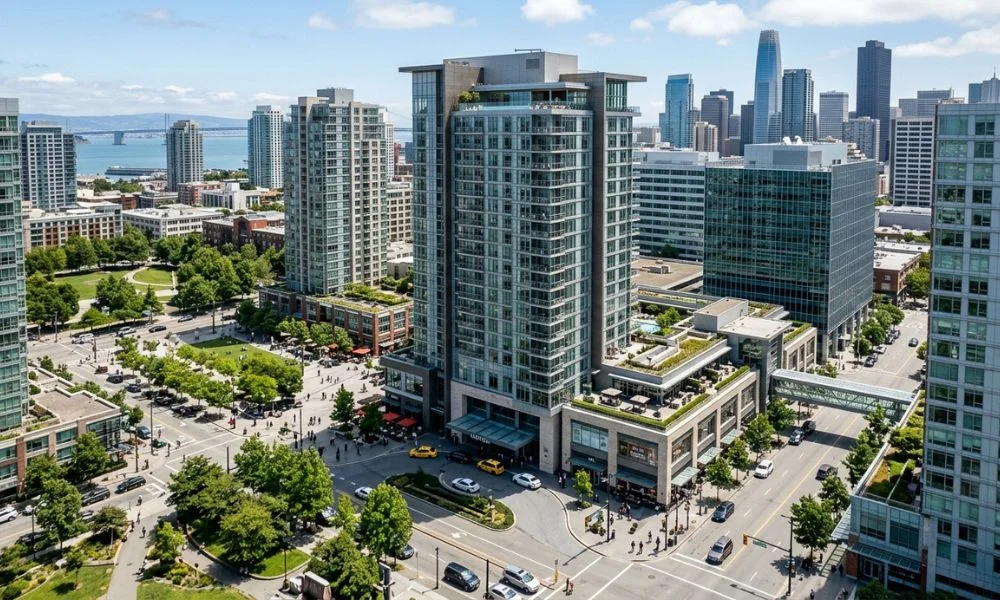
A group of international investors is taking legal action regarding the Hotel Indigo project in downtown Los Angeles, alleging that the developers concealed critical financial issues that plagued the project from its inception.
Filed in federal court on August 20, 2026, the lawsuit centers around the $110 million raised through the EB-5 immigrant-investor program, where each investor contributed $500,000 towards building the 350-room hotel within Greenland Holding Group's expansive Metropolis complex at 900 Wilshire Boulevard. The platform allows foreign nationals to invest in U.S. projects in exchange for a U.S. green card.
According to the lawsuit, the initial appeal to investors was heavily reliant on Greenland's reputation as a Fortune Global 500 company and its listing on the Shanghai Stock Exchange. Investors were attracted by the potential for returns—albeit modest, projected at just 1%—with repayment dependent on either the sale or refinancing of the hotel. The complaint suggests that the loan was exclusively secured by the hotel itself, lacking broader support from Greenland's additional assets, including a significant apartment complex in Brooklyn.
Financial Disparities and Missing Information
The investors argue that the financial projections were fundamentally flawed from the beginning. A March 2015 appraisal valued the property at $202.2 million, which fell short of the estimated development cost of $216.5 million. This discrepancy, they claim, rendered the prospects of loan repayment nearly impossible—a detail that was allegedly omitted from the offering documents presented to investors. This isn't just a minor oversight; it raises serious questions about the due diligence conducted by the project sponsors and the integrity of the financial information presented.
What’s more, the integrity of the project sponsors is also under scrutiny. The regional center responsible for the EB-5 offering, A&J Capital, was previously implicated in a lawsuit by the Securities and Exchange Commission (SEC) for misappropriating over $12 million in funds from similar investment projects. A final judgment ordered the return of $24.7 million to investors. By April 2018, the regional center had its license revoked by immigration authorities. Investors contend that A&J Capital falsely assured them regarding the safety of their investments throughout this turmoil, which stands as a significant breach of trust and responsibility.
Allegations of Concealed Deterioration
The lawsuit details a disheartening trend as Greenland's credit rating plummeted towards default during 2021 and 2022. Reports of a delayed $488 million bond payment and the rapid sale of a neighboring Metropolis apartment tower for $504 million, which resulted in over a $200 million loss, surfaced without communication to the investors. Alarmingly, the hotel itself was listed for sale while investors were kept in the dark regarding these developments. This lack of communication not only deepened the investors' distrust but also raises questions about the accountability of developers in such high-stakes projects.
As time passed, particularly beyond the original five-year loan term, investors assert they've not received any capital back—an amount exceeding $4 million. The lawsuit encompasses various claims, including violations of federal and state racketeering laws, California securities law breaches, and breaches of fiduciary duty. The investors are seeking the court's intervention to nullify their investments and recover damages, which include a request for at least $11 million in punitive damages. They’re venturing into a legal battle that not only involves their financial futures but potential precedent for how similar claims could be handled in the future.
Implications for Future EB-5 Projects
For developers who raise funds through the EB-5 program, this case underscores the paramount importance of transparency, particularly regarding financial disclosures. If you're working in this space, you'll recognize this has significant implications: when both project economics and the financial health of the parent company are compromised while investor funds remain undeployed, the potential for legal repercussions increases dramatically. This type of oversight—or negligence—could lead to investors being wary of future opportunities, which would ultimately restrict vital funding for various projects across the country.
Looking ahead, it's uncertain how courts will respond to the avalanche of allegations or what the full consequences might be for Greenland and A&J Capital. As of now, none of the claims have been adjudicated in court, and the defendants have yet to respond to the allegations. However, the ripple effect of this case will likely be felt in the broader field of EB-5 investments. Developers may need to rethink their investor communications strategies, conduct more rigorous due diligence, and improve their financial disclosures to avoid falling into similar traps.
The scrutiny surrounding this case serves as a cautionary tale for other real estate projects and highlights a critical issue in the intersection of global investment and local real estate development. Is this just another blip in a system that functions mostly as intended, or are these signs of deeper systemic issues that require serious attention? That's the million-dollar question.
Discussion
Sign in to join the discussion.