Rising mortgage rates might be a catalyst for increasing housing supply, offering buyers more options in the current market.

Concerns over a dwindling number of available homes for sale could be alleviated soon. While the pace of inventory growth has slowed, there are signs that the market is on the verge of becoming more favorable for buyers. However, it's essential to interpret these trends cautiously, as they may reflect broader fluctuations driven by external economic factors.
Inventory Growth: Signs of Stabilization
Recent data indicates a modest year-over-year increase in active listings, with a 2.1% rise in July. This figure stands in contrast to the 10% growth seen in January and an even more significant 31.5% spike in May of last year. The continuous inventory growth over the past three months suggests that this slowdown may be nearing its lowest point. Could this mean a lasting change? Only time will tell.
It's essential to recognize that homes are still entering the market, as shown by the consistent rise in inventory reflected in recent trends. However, buyers should tread carefully, as not all inventory is created equal. Some markets may still experience disproportionately high competition for the available homes. Local economic conditions, demographic trends, and even seasonal fluctuations can skew the supply and demand equation in surprising ways.
Best July for Inventory Since 2019
After hitting rock-bottom levels in 2021, the national inventory of homes for sale has nearly doubled over the past couple of years. It's notable that this July marked the highest inventory level for that month since 2019, indicating a steady recovery (see graph below):
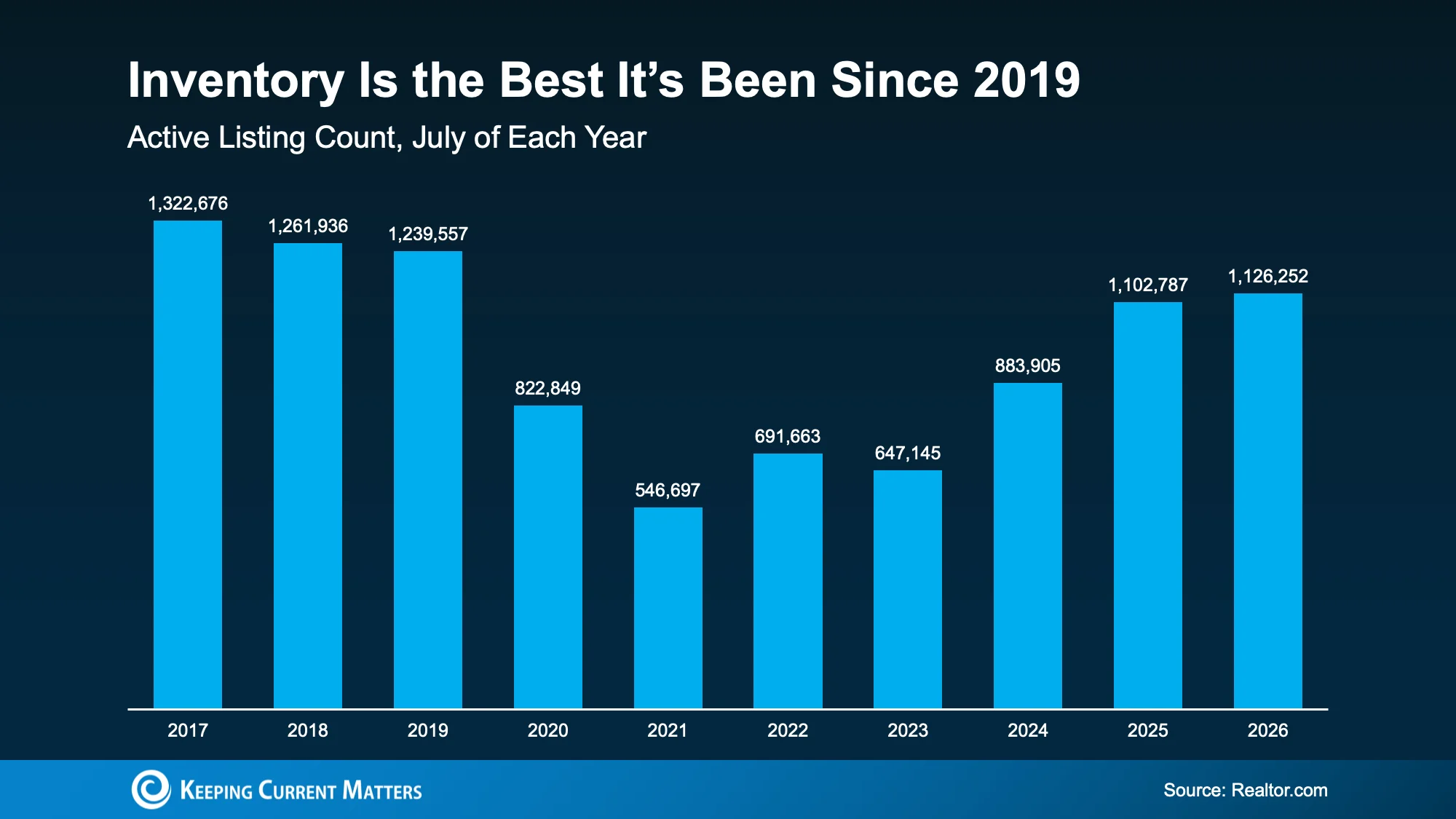
While the market is still short about 150,000 listings needed to match pre-pandemic levels, the expectation of a potential return to these levels by year-end is gaining traction. This anticipated resurgence is primarily driven by an unexpected factor: mortgage rates. When rates rise, they tend to push buyers out of the market, while simultaneously making existing homeowners hesitant to sell. This creates a complex dynamic where both supply and demand are adjusting in tandem.
The Link Between Higher Rates and Inventory Growth
There's a notable correlation between rising mortgage rates and an increase in housing inventory. As Mike Simonsen, Chief Economist at Compass, highlighted, “When rates rise; inventory rises. When rates fall; inventory falls.” This cyclical relationship can complicate the market. The trend observed from last July to March shows that as rates dropped, inventory growth stalled—a scenario that could lead to fewer choices for prospective buyers.
However, a rise or sustained elevation in rates might lead to an influx of properties entering the market once again. Higher mortgage rates generally discourage potential homebuyers from purchasing, prompting sellers to list their homes to avoid being trapped in their current situations. Current trends suggest that mortgage rates will likely remain in the mid-to-upper 6% range for the foreseeable future. Forecasts from Realtor.com estimate a year-over-year inventory increase of 3.6% by the end of 2026, indicating that the market may regain more listings as economic pressures persist.
What This Means for Buyers
-
Inventory growth is projected to accelerate for the remainder of the year, potentially alleviating buyer frustration.
-
By year-end, inventory levels are expected to align with the norms seen at the end of 2019, which should lead to a more balanced market.
For buyers, this presents a promising shift. Though current mortgage rates might not be ideal, they are contributing to an increase in housing supply. This is more significant than it looks—more homes mean more options. A larger pool of homes not only increases buyer options but also enhances negotiation power. This alleviates pressure during the search process, which has plagued many in recent years. After all, nothing is worse than competing for a handful of homes.
Implications and Future Outlook
The increase in inventory signals a notable shift in the market dynamics. Buyers should prepare for a landscape where choices become more plentiful but must remain cautious of fluctuating interest rates. If you're working in this space, understanding how these trends interact with buyer sentiment and local economic factors could be the key to staying ahead. And yet, the question remains: Will an increase in inventory ultimately lead to a healthier market, or will the persistent rise in mortgage rates continue to hamper true recovery?
Inventory is gradually increasing, signaling a better selection for homebuyers. For those interested in exploring current offerings in their desired areas, reaching out to a local real estate agent could provide valuable insights, especially when considering the broader social and economic factors at play. This is a time of cautious optimism, but don't overlook the challenges that could arise as the market adjusts to these shifting dynamics.
Discussion
Sign in to join the discussion.