Mortgage rates are influenced by the spread between the 10-year treasury yield and current economic conditions, suggesting limited potential for drastic declines.

If you're anticipating a significant drop in mortgage rates before making a purchase, you might need to adjust your expectations. Various economic factors, particularly the spread between mortgage rates and the 10-year treasury yield, play a critical role in this dynamic. Understanding this interplay can shed light on the current state of mortgage rates and their potential trajectory.
Historical Patterns of Mortgage Rates and Treasury Yields
Mortgage rates have long been correlated with the 10-year treasury yield, a benchmark that reflects investor sentiment regarding economic conditions. Historically, when the economy strengthens, treasury yields rise as investors demand higher returns for the perceived lower risk of lending. Conversely, during periods of economic uncertainty, treasury yields drop as investors flock to safe-haven assets, thereby decreasing borrowing costs. This correlation has been examined extensively, with data over the last fifty years showing a consistent pattern that investors and analysts watch closely.
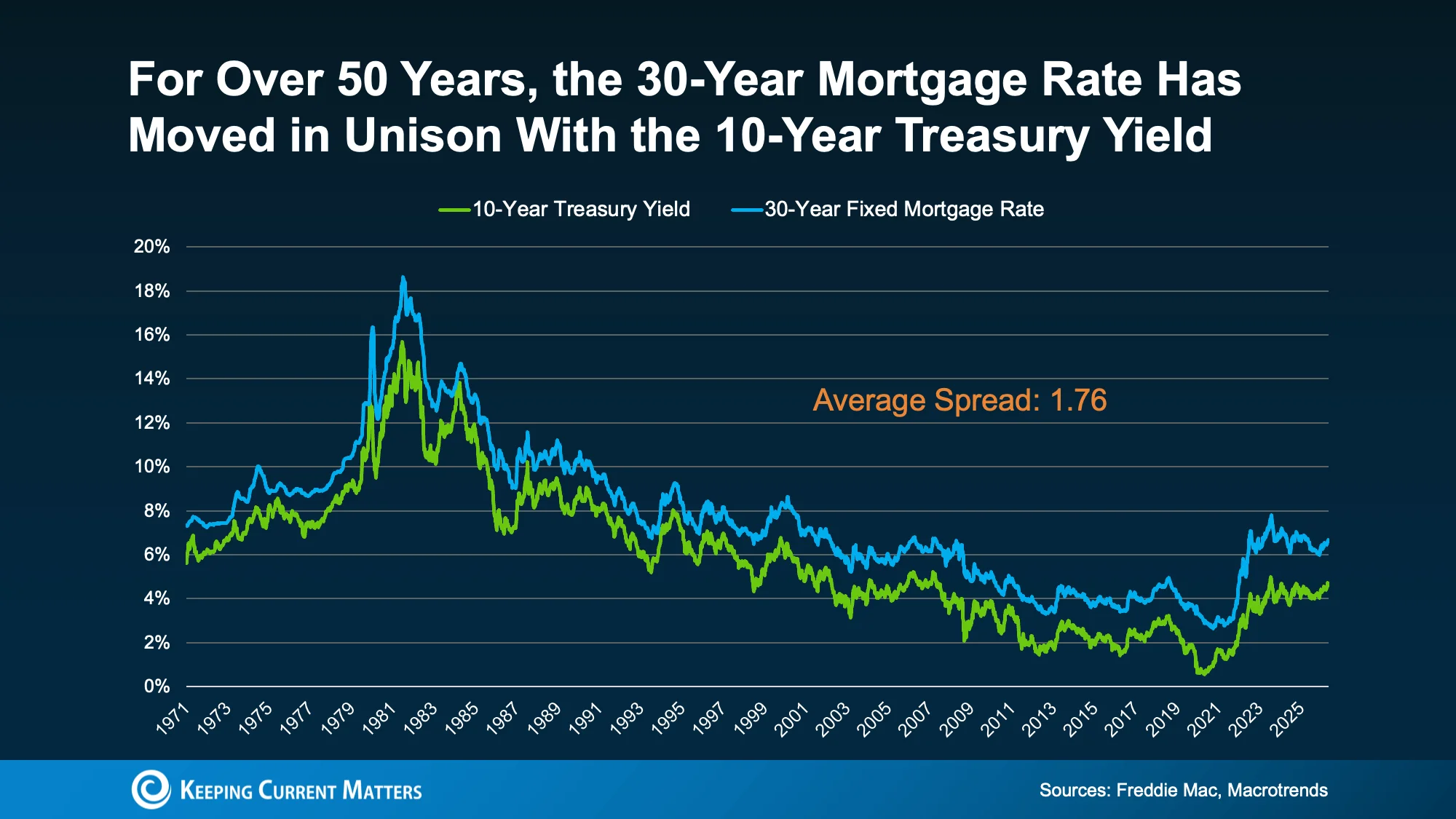
The difference between these two rates, referred to as the "spread," significantly impacts mortgage costs. Typically, this spread averages around 1.76 percentage points; wider spreads indicate higher mortgage rates relative to the treasury yield, making loans more expensive for consumers. When you see a narrowing spread, it often suggests that mortgage rates are adjusting downward, providing some relief for buyers. However, fluctuations may also imply shifting risk assessments by lenders, and you can bet they’ll be pricing accordingly.
The Current Spread and Its Implications
The expectation for lower mortgage rates might not materialize in the near future, primarily due to the current dynamics of the spread between the 10-year treasury yield and mortgage rates. In recent years, this gap had widened to about 3.19 points as economic uncertainty gripped the market. However, this figure has recently narrowed to around 2.01 points, hovering just above the long-term average. This shift indicates that while rates are more stable, buyers shouldn't expect significant drops.
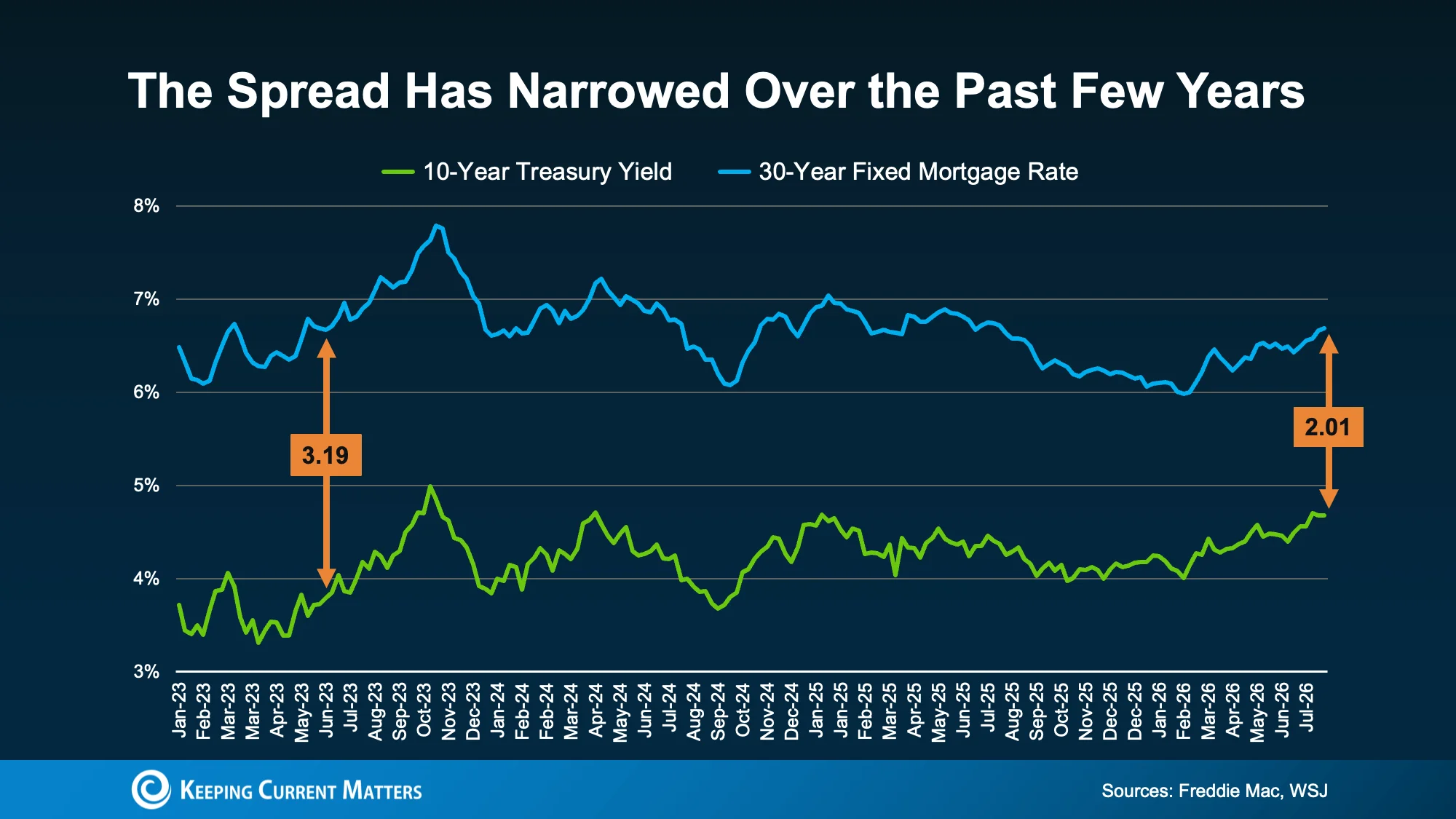
This narrowing suggests less room for mortgage rates to fall, meaning buyers might have to contend with rates that aren't as favorable as they would hope. While a normal spread indicates stability, it simultaneously limits the likelihood of substantial declines. What this means for you, as a buyer, is that you're competing in a market that isn't likely to soften for the foreseeable future. If you wait too long, rising prices might further erode your purchasing power.
Current Mortgage Rates Explained
The current mortgage rate can be understood as the sum of the treasury yield and the spread. For instance, with the 10-year treasury yield currently pegged at 4.68%, any adjustments to these components will directly influence mortgage rates. If the spread were to reflect those heightened figures from earlier years, rates could be nearing an eye-watering 8%. Instead, the current narrowing results in an effective rate around 6.69%. That’s a noticeable difference in monthly payments compared to what many buyers might have assumed based on historical norms.
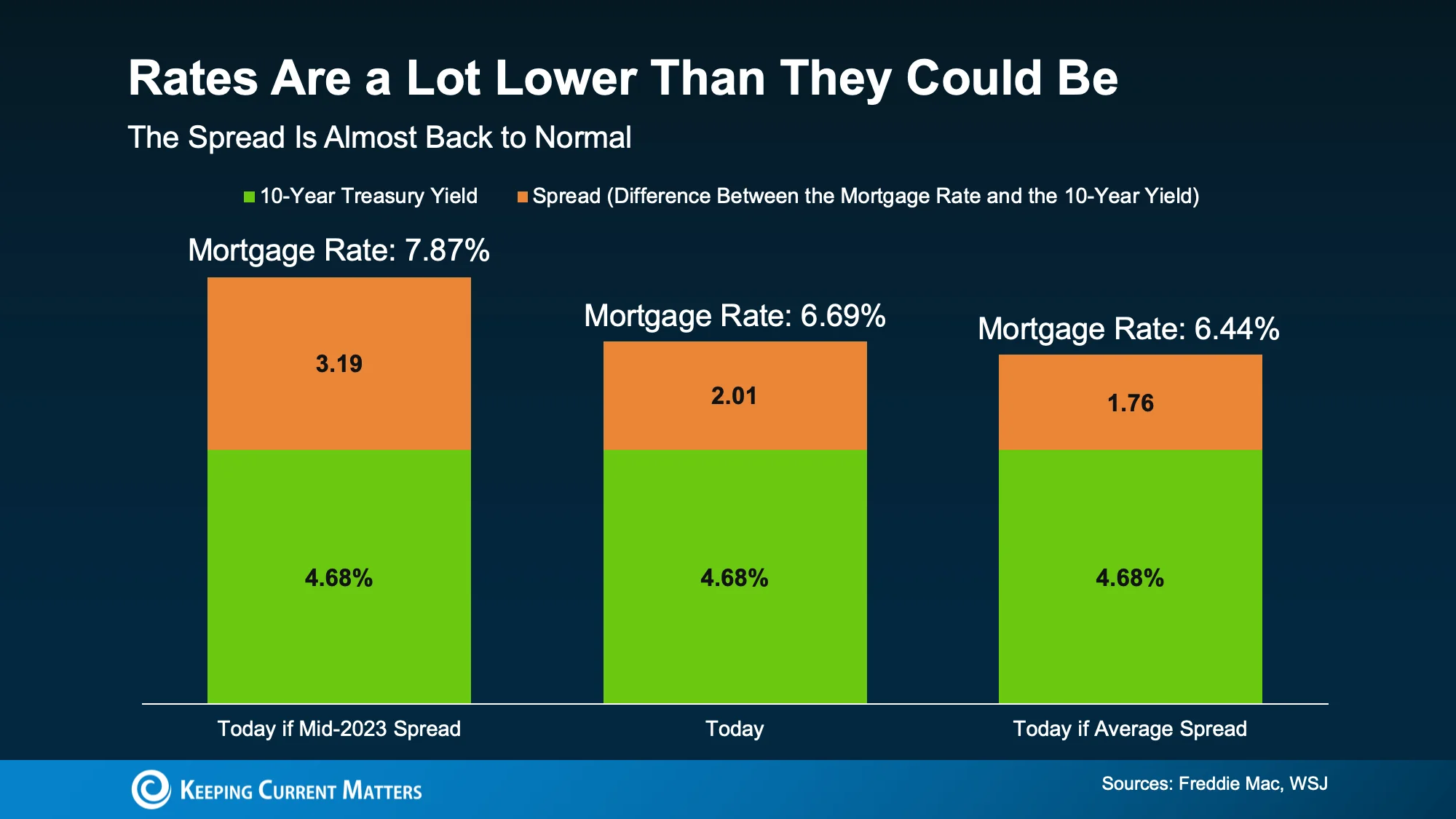
Highlighting the importance of spread dynamics, Logan Mohtashami, Lead Analyst at HousingWire, remarked, “Mortgage spreads being better in 2026 is the housing hero story of the year." This statement encapsulates the challenges that homebuyers face in regard to mortgage affordability today and in the future. If the spread were to revert to its long-term average, we might realistically expect rates around 6.5% — a modest expectation but still a considerable burden for those with tight budgets.
Forward-Looking Perspective
The current mortgage environment showcases the trade-offs presented by a narrowing spread. Although rates may seem less than ideal, they are advantageous compared to what they could have been under broader spreads. As a buyer, it's essential to stay updated on these movements, as they influence potential monthly payments significantly. Even if you might feel stuck, looking for pockets of opportunity could help you secure a favorable deal.
(And this is the part most people overlook.) Local expertise can make a world of difference. This knowledge helps buyers cut through market noise and identifies what these rates specifically mean for their unique situations. While macroeconomic factors loom large, your local real estate market may have its own nuances. And yet, the interplay of national trends will continue to be a powerful force determining buyer sentiment.
Implications for the Future
As we observe the current mortgage rate trends and their factors, it's clear that potential buyers will need to remain vigilant. The implications of a narrowing spread between treasury yields and mortgage rates may indicate a market that has settled into a certain range, limiting the hope for significant decreases. For those considering home purchases or refinancing, actively monitoring these changes should be part of their financial strategy. In a market where uncertainty prevails, understanding the broader economic context will empower buyers to make informed decisions.
Discussion
Sign in to join the discussion.