Lego plans to enhance its Monterrey facility with a $400 million investment, creating 1,300 new jobs and expanding storage capabilities.
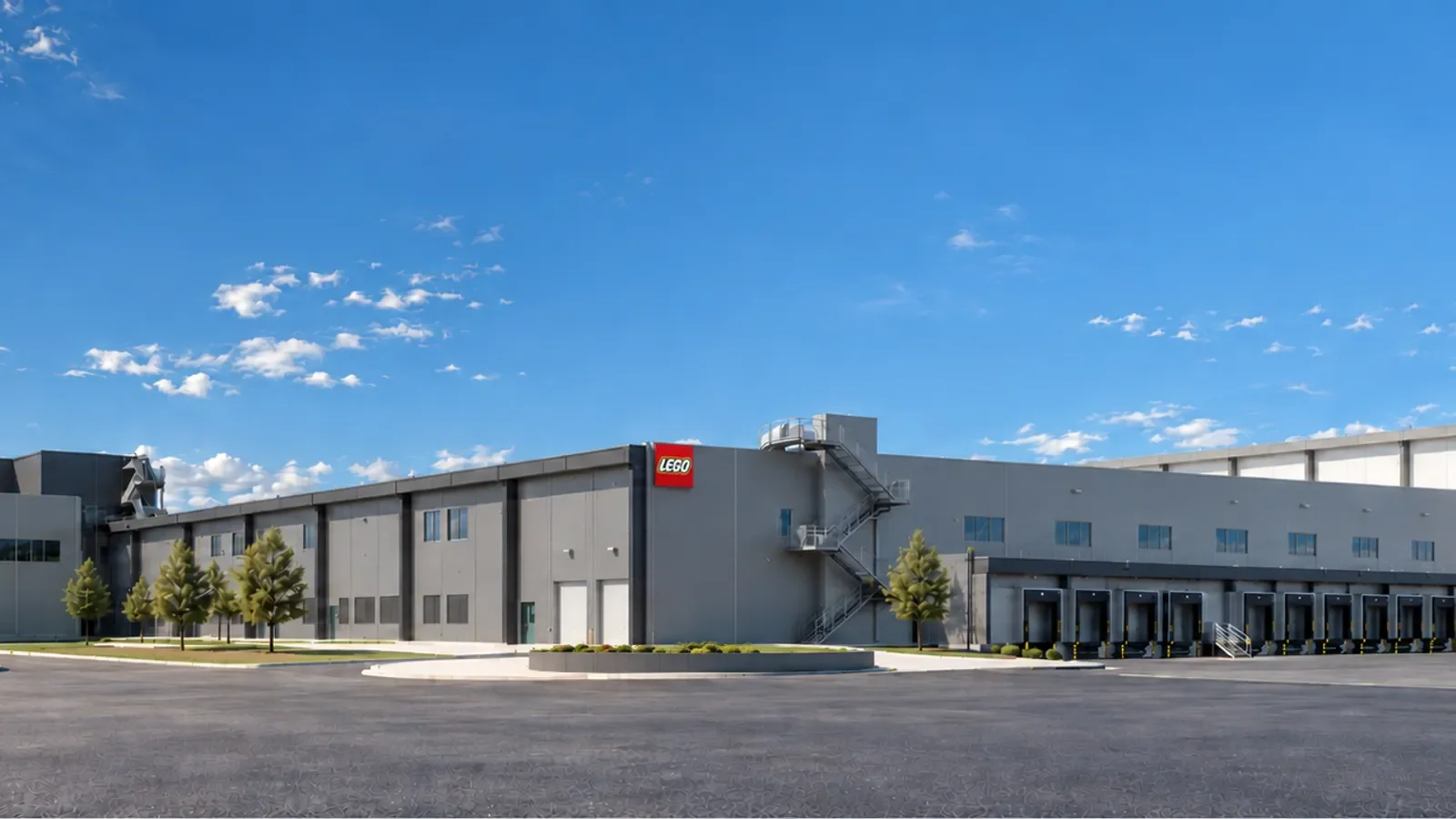
The Lego Group is set to invest over $400 million to broaden the scope of its manufacturing operations in Monterrey, Mexico. This expansion aims to enhance the facility's packing and warehousing capabilities, with plans to create 1,300 new jobs in the region. Such a sizable investment demonstrates Lego's confidence in both the Mexican manufacturing sector and the ongoing demand for its products across the Americas.
Expansion Details
As part of this initiative, Lego will add more than 667,000 square feet of operational space. The construction includes a new packing hall and a state-of-the-art high-bay warehouse that will facilitate high-density storage, with stacks reaching heights between 40 and over 150 feet. High-bay warehouses, which rely on automated systems for efficiency, represent an important trend in modern logistics, enabling firms to maximize storage while minimizing foot traffic and manual labor.
It’s worth recognizing that the Monterrey facility currently employs around 7,300 workers. With construction expected to begin in early 2027 and completion projected for 2029, this expansion signifies a substantial growth phase for the plant. Such growth isn’t merely about meeting demand; it embodies Lego's strategic focus on operational excellence to support its competitive positioning. Increasing capacity is vital, especially as consumer trends lean towards greater customization and faster delivery times. That could very well end up powering Lego's supply chain logistics in an increasingly demanding marketplace.
Strategic Importance
The Monterrey factory is crucial for Lego's production and packaging processes, serving customers throughout the Americas. According to Nancy Sánchez, the general manager of the Monterrey plant, the facility is integral to the company's “‘flexible and resilient, regionally based global supply chain network.’” This strategy, in place for over 15 years, allows Lego to adapt to shifting market demands while fostering long-term growth. A resilient supply chain is becoming essential in today's unpredictable economic climate, where disruptions are increasingly common due to various factors including geopolitical events.
This site has been operational since 2008 and has already undergone several expansions. Standing as the largest plant within Lego's manufacturing portfolio, it serves as a testament to the company’s commitment to this location. Such dedication is no small feat, especially since companies often shift operations based on profitability. Maintaining and enhancing local manufacturing jobs demonstrates Lego's long-term vision and reliance on the skilled workforce available in Monterrey.
Future Growth and Sustainability
In statements, COO Carsten Rasmussen emphasized the importance of this expansion, highlighting Lego's ongoing dedication to Mexico and its manufacturing network. The investment is not solely about increasing capacity; it also opens avenues for technical training and professional growth for employees. Sanchez elaborated on this, stating that new opportunities will arise, offering training in vital skills aligned with the current manufacturing landscape. This is more significant than it looks: it helps create a skilled workforce that not only benefits Lego but also nurtures the local economy.
Lego’s efforts extend beyond operational expansion; the company is actively involved in sustainability initiatives. In recent years, the company has begun phasing out single-use plastics and replacing them with paper alternatives, with a target completion date set for 2027. The Monterrey location is also making strides in reducing its environmental impact through solar panel installations and efficient waste management practices. It’s a complex balancing act that many corporations are attempting: being environmentally responsible while meeting production needs. And yet, investing in sustainability can often lead to greater long-term cost-efficiency, which might be crucial in as competitive an industry as this one. (and this is the part most people overlook)
The expansion is part of Lego's broader strategy, which includes the construction of a second manufacturing facility in Chesterfield, Virginia, with an estimated investment of $1.5 billion. Set to open in 2027, this facility, alongside the Monterrey plant, will solidify Lego's manufacturing and distribution capabilities in North America. By diversifying its geographical footprint, Lego is positioning itself to better handle market fluctuations and regional demands.
Implications for the Future
Lego's investment in Monterrey not only reflects its commitment to meeting market demands but also illustrates a forward-thinking approach to workforce development and environmental responsibility. With global pressures to act sustainably and economically, this dual focus will likely serve Lego well in the long run. If you're working in this space, you must observe how other companies react as consumers increasingly prioritize environmental consciousness.
The company’s expansion efforts could very well serve as a litmus test for the effectiveness of combining growth with sustainability. The strategic developments in Monterrey might also influence the broader manufacturing sector to simultaneously pursue innovation while addressing the sustainability crisis. As competition hots up, firms will need to ask themselves: can they afford not to follow suit?
In sum, Lego's latest move isn't merely about bricks and mortar; it's about shaping a future that embraces growth, skill development, and responsibility. As the company builds for tomorrow, all eyes will be on its ability to deliver on these ambitious promises.
Discussion
Sign in to join the discussion.