Wilmington Savings lost its bid for foreclosure in New York due to four separate documentation failures, challenging its standing in court.
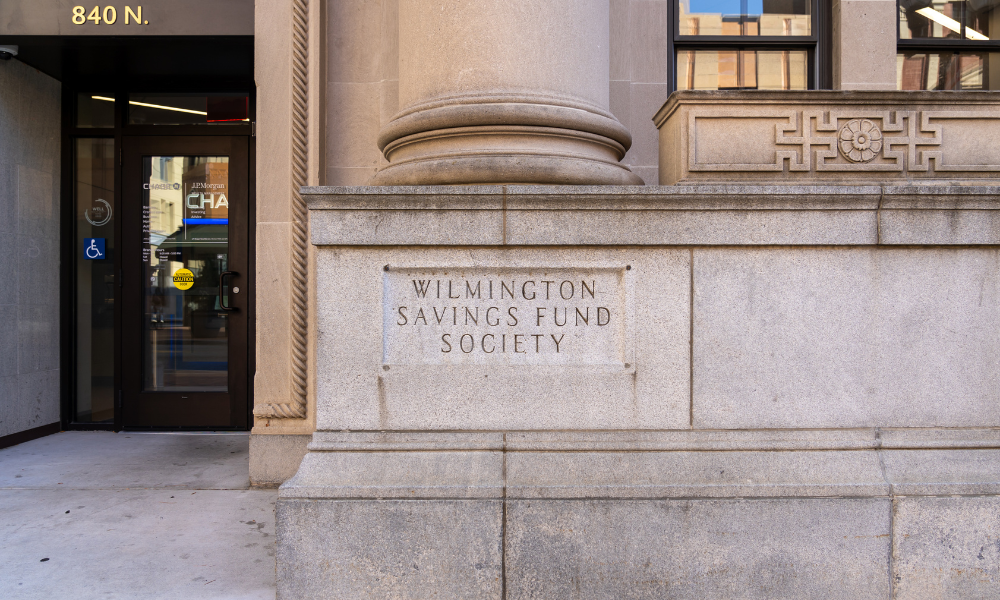
A lender's attempt to foreclose on a home equity line of credit (HELOC) in New York was thwarted by notable documentation issues, leading to a significant ruling by the Appellate Division, Second Department. On September 16, the court upheld a lower court’s decision, denying Wilmington Savings Fund Society's motion for summary judgment against two borrowers from Rockland County.
The crux of the issue appeared to be Wilmington Savings' inability to demonstrate legal ownership of the HELOC agreement it sought to enforce. Initially, the borrowers secured the line of credit through Bank of America, which later assigned the mortgage to Wilmington. Following a foreclosure filing in November 2022, the borrowers contested the lender's standing, prompting the court to scrutinize Wilmington's documentation.
Key Documentation Flaws
The first red flag was the assignment of the mortgage. Wilmington Savings failed to present any evidence that the assignment executed by Pretium Mortgage Credit Partners I Loan Acquisition, LP, acting as attorney-in-fact for Bank of America, was valid. This lack of proof rendered the assignment itself unverified, undermining Wilmington's claim. In foreclosure processes, showing a clear chain of title is essential, and Wilmington's inability to do so raised immediate concerns about its authority to act.
Furthermore, the allonge—a document attached to an instrument for endorsements—presented its own complications. The endorsement from Bank of America was undated, which means it lacked a crucial temporal reference that verifies the timing of the endorsement. Just as troubling was the court's determination that there wasn't enough evidence to prove it was firmly attached to the HELOC agreement. This aspect of the case illustrates a broader issue in lending practices, where documentation often becomes overly complex and susceptible to scrutiny.
Attempts to establish possession didn’t fare much better. An affidavit from a Bank of America assistant vice president could not substantiate that Wilmington ever held the original HELOC agreement. The situation grew even more complicated with Wilmington's admission that the original note was lost. Although New York's UCC 3-804 allows a party to enforce a lost instrument under certain conditions, Wilmington's affiant failed to clarify when and how the note went missing, seriously jeopardizing the lender’s position. This raises an unsettling question about the management of documents within financial institutions and their potential impacts on court proceedings.
Broader Context and Implications
Cases like this serve as a reminder of the critical importance of proper documentation in the lending industry. A ruling like this might seem specific to one case, but it has ripple effects throughout the foreclosure process. It highlights how inconsistent documentation can undermine even otherwise strong financial positions. What this means for you in the industry is clear: any oversight can transform a straightforward foreclosure attempt into a lengthy legal battle.
The case underscores a critical takeaway for foreclosure teams: thorough documentation is essential. The Second Department evaluated each of the four documentation issues independently, suggesting that even rectifying one wouldn’t safeguard the entire case. This indicates an intensified scrutiny on documentation as courts become less willing to overlook technicalities in such high-stakes situations. The lower court had initially dismissed the complaint without a party's request, a move the appellate court viewed as inappropriate due to the lack of extraordinary circumstances. Wilmington Savings now has an opportunity to rectify its documentation errors moving forward. But the question remains: will they truly learn from this misstep?
Future Outlook for Lenders
Going forward, this case may serve as a precedent, influencing how future foreclosure cases are approached. Lenders might find themselves needing to bolster their documentation processes to prevent similar outcomes. As judicial scrutiny increases, there could be a shift in how lenders manage their legal and administrative paperwork. If you're working in this space, remember: today's legal landscape demands more than just a lender’s claim; it requires well-documented proof of ownership and authority.
And yet, as stakeholders navigate these complexities, there's still an underlying instability in the housing market. The reluctance of courts to accept incomplete documentation could lead to fewer foreclosures, but it also means that lenders must prepare for rising defaults. Addressing documentation flaws might prevent immediate legal impasses, but a failure to tackle underlying financial realities could prolong the recovery period for lenders and borrowers alike.
If any silver lining exists, it might be in the potential for lenders to improve overall practices following such rulings. They'll likely collaborate more closely with legal teams to ensure that each element of their documentation meets judicial standards. This seems necessary, as the alternative—continuing to face courtroom losses due to paper trails—won't only hurt their bottom lines but could also erode consumer trust. Such scrutiny of documentation practices isn’t just about foreclosures; it touches on the larger narrative of accountability in a sector that historically has operated with a certain degree of leniency.
Discussion
Sign in to join the discussion.