The industrial rental market shows mixed trends, with Atlanta and Bay Area properties thriving, while other regions face rising vacancies and tempered rent growth.
Key Insights from Recent Market Trends
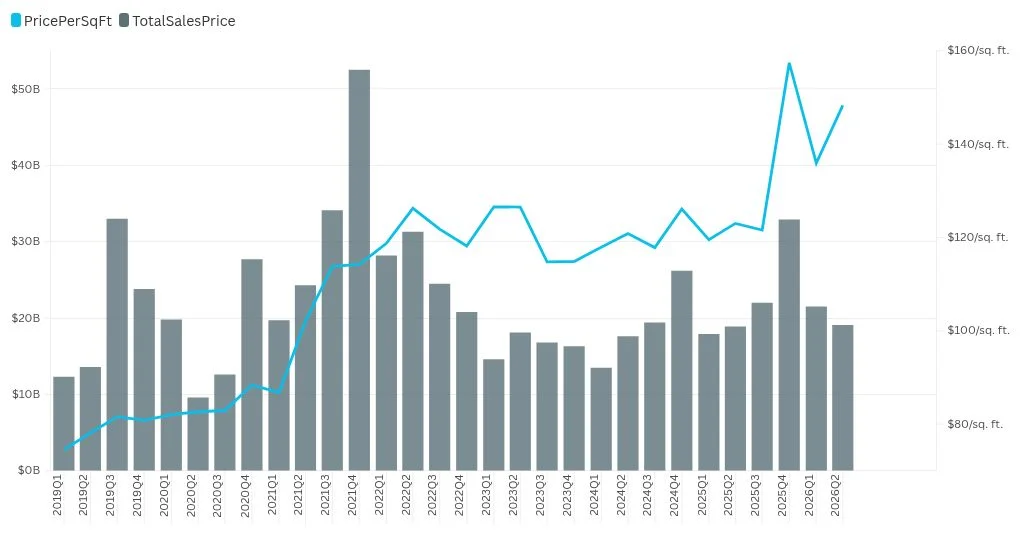
If you're tracking the current pulse of the real estate market, there are critical developments to consider. First, the electric vehicle (EV) sector, despite facing some bumps in the road, is looking brighter when you factor in long-term projections. Challenges have arisen, particularly from automakers' focus on luxury models over more affordable options, and ongoing concerns surrounding charging infrastructure. Yet, investments totaling nearly $200 billion indicate a commitment to future growth, and many projects remain on the table, albeit with delays. Meanwhile, the industrial rental market is experiencing a notable slowdown. Gone are the days of rampant double-digit rent hikes; most markets are witnessing a more tempered growth that favors tenants in negotiations. For example, industrial rents in the Inland Empire are up only 8.4% to $12.42 per square foot, while some areas—like Orange County—command an even steeper $17.86 per square foot, representing the highest rates across the U.S. In construction news, a significant 5 million square feet of industrial space is actively being built across the nation, with Atlanta emerging as a standout player. The region's revitalization in warehouse development is particularly noteworthy, led by substantial projects like the River Park E-commerce Center, which is poised to further enhance Atlanta's logistics capabilities. The Bay Area also showed impressive resilience, led by the Fremont submarket where six properties were sold for an impressive collective price of $402.5 million. That averages out to $447 per square foot—an encouraging signal for industrial valuations in a region recovering from losses faced in previous years. As you look to navigate this landscape, it’s clear that while some areas teem with growth potential, others are recalibrating in response to shifting dynamics. This mix of opportunity and caution should guide investment strategies moving forward. ---Regional Highlights
The picture across various U.S. regions reveals something of a mixed bag. In the Inland Empire, industrial rents rose to $12.42 per square foot, making the region an attractive option when stacked against nearby markets like Orange County, which remains the most expensive at $17.86. If you're in Chicago, there’s notable momentum as year-to-date industrial sales have surged 39% to $2.1 billion as of June. In Memphis, vacancies soared to 10%, a concerning statistic after a steep yearly drop in demand. In New Jersey, industrial development is thriving with a pipeline hitting 8.8 million square feet, a staggering 24% increase month-over-month. Keep these regional dynamics in mind as you assess your options and make sense of the fluctuating market conditions.Insight into Recent Trends in Industrial Real Estate
The spike in industrial property transactions in June is striking, particularly in Kansas City and Minnesota’s Twin Cities, where sales jumped by 55% and 53%, respectively. This surge isn’t just random; it reflects a broader momentum in the industrial sector. For instance, Real Capital Solutions invested $34 million in an expansive 313,057-square-foot industrial property located at 3701 Wayzata Blvd in Minneapolis’ St. Louis Park suburb. Kansas City, meanwhile, saw impressive deals like the acquisition of properties from VanTrust Real Estate by Sealy & Co. and MDH Partners for a combined total exceeding $80 million.
Regional Highlights
Strong Performance in Southern Markets
Southern markets are not only witnessing robust sales but also impressive price adjustments. Atlanta and Houston led year-to-date sales with staggering increases of 178% and 160%, respectively, each surpassing the $1 billion mark. Baltimore, taking a different path, saw rental prices rise by 11%, reaching $141 per square foot, just shy of Charlotte’s $146. In contrast, Nashville and Tampa faced price declines, with year-to-date prices sinking to $118 and $138 per square foot, respectively.
Interestingly, industrial vacancies are tightening. In Memphis, the rate plummeted to 10%, down 250 basis points year-over-year and improving by 80 basis points month-over-month. Similar trends are afoot in Baltimore, where vacant spaces decreased, underlining tightening market conditions.
When we analyze Atlanta's industrial landscape, it’s particularly noteworthy. The city has increased its industrial construction pipeline by 32% month-over-month, totaling 18.4 million square feet currently under development. This positions Atlanta as a major player in the industrial sector immediately after Houston and Dallas — indicators of escalating demand and potential future growth.
Northeastern Markets
Continued Growth in New Jersey and Philadelphia
Riding a wave of expansion, New Jersey's industrial development pipeline surged to 8.8 million square feet, reflecting a noteworthy 24% monthly growth. Average rents, now averaging $12.80 per square foot, signify a 6% increase year-over-year, contrasting sharply with Philadelphia's more modest 4.8% growth to $8.88 per square foot. The rental landscape showcases a continuing divergence between the two markets, with Bridgeport and Boston leading in lease spreads.
Philadelphia, however, is not to be overlooked, with year-to-date sales breaking the $1 billion mark, thanks to a staggering 166% increase in trading volume, the highest among Northeastern markets. Yet, a slight uptick in vacancy rates above 10%, spurred by increasing inventory, prompts a closer examination of future trends.
Outlook on Employment in Warehousing
Stability Amid Shifts in the Labor Market
The warehousing sector's employment figures reflect a complex picture. The sector accounted for over 20,000 job additions in the first half of the year, amounting to a modest 1.1% rise. However, the labor market remains 30,000 workers shy of levels recorded in early 2025, indicating an uphill battle to reclaim lost ground. These dynamics are influenced significantly by automation integration and ongoing tariff uncertainties, which have fostered a cautious hiring climate.
For industry stakeholders, the trends in industrial real estate and warehouse employment hint at both opportunities and challenges. If you're eyeing investments or expansions in this sector, you'll need to sift through the numbers carefully and stay alert to emerging patterns that could dictate the market's direction in the coming months.
Discussion
Sign in to join the discussion.