Top U.S. Cities for Gen Z: Pittsburgh and Madison Lead the Way in Affordability and Job Opportunities
Published Sep 08, 2026605 readers
Pittsburgh and Madison rank as top cities for Gen Z, offering affordable living and strong job markets, crucial for attracting young talent.
If you’re keeping an eye on the shifting priorities of the housing market, the rise of Gen Z is pivotal. As this generation transitions into career-driven years, retaining young talent becomes an invaluable strategy for cities. In a competitive job landscape—with the complexities of AI looming—locales that can provide meaningful opportunities alongside affordable living conditions are poised for growth. This is particularly pronounced among midsized cities. Here, places that strike a balance between offering entry-level career prospects and keeping living costs manageable can entice young professionals to settle down, contribute to the local economy, and potentially invest in their communities.
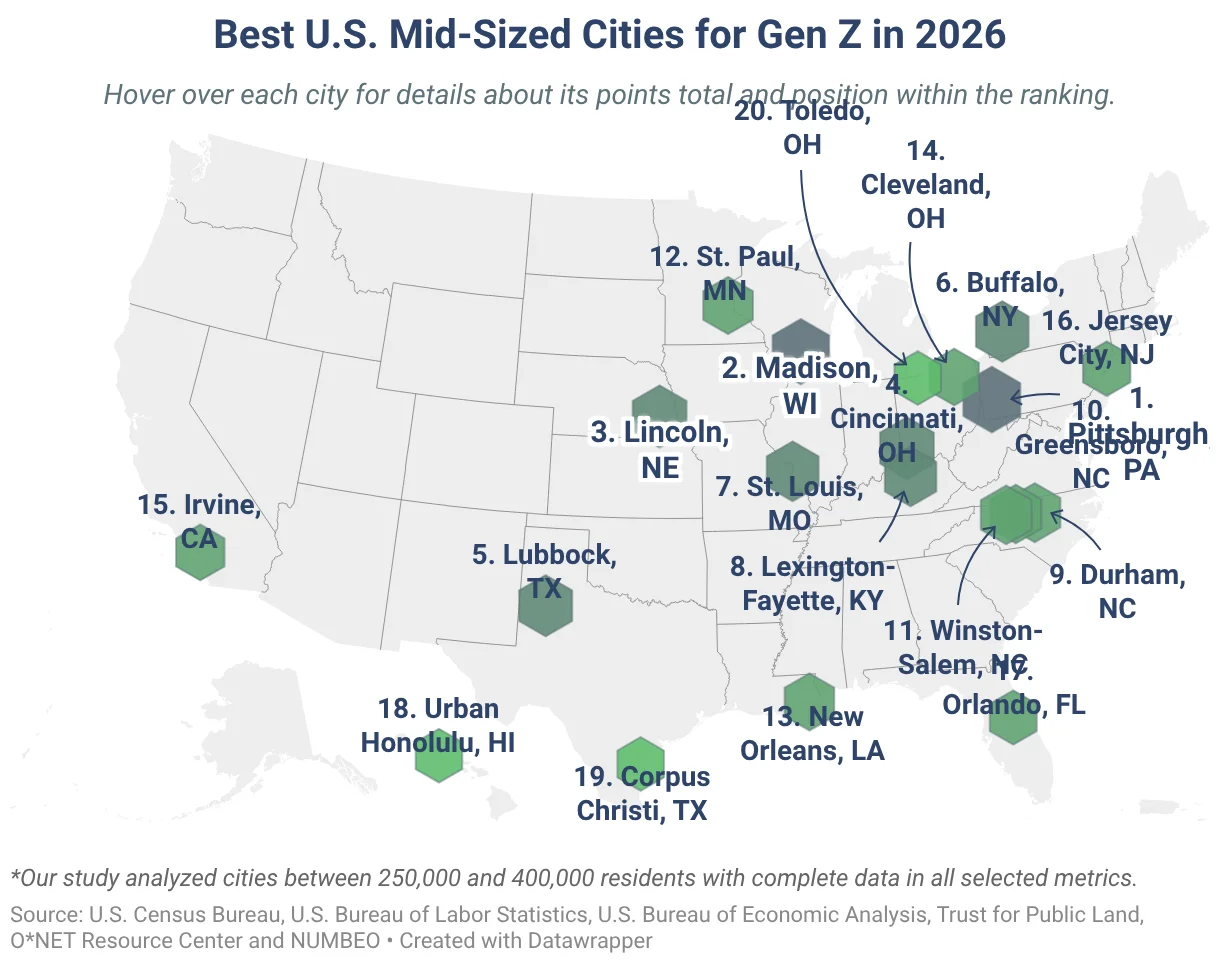
As part of our latest analysis, we evaluated U.S. cities with populations ranging from 250,000 to 400,000, using nine key metrics focused on affordability, employment opportunities, and overall quality of life. The results highlight the best prospects for Gen Z, culminating in a top 10 list that showcases which cities are leading the charge in attracting this dynamic demographic.
Pittsburgh’s Surprising Victory
Pittsburgh has taken the lead in this year's rankings, despite not dominating any single category. It clinched the top position with a score of 69.4, just edging out Madison, Wisconsin, which scored 68.4—and it did so by demonstrating consistent performance across various metrics. The Steel City’s strength lies in its balance, achieving top-five finishes in four categories and ranking in the top half across all nine assessed.
What sets Pittsburgh apart is its robust educational sector, with about 65% of young adults enrolled in one of its ten colleges and universities. This ensures that the city retains a significant youth demographic, constituting nearly 11% of its population—an attractive figure for local employers. With youth unemployment at a remarkable 4.8%, Pittsburgh not only provides ample job opportunities but also boasts around 2,100 venues for social and recreational activities. Transportation is a plus, too; with 24% of working residents opting for non-car commuting, the city ranks third in that category among those studied.
A Strong Contender: Madison, Wisconsin
While Pittsburgh celebrates its victory, Madison isn't far behind. Holding the second spot, it stands out for its robust Gen Z population, which makes up 16% of the city's residents. With a staggering unemployment rate of just 2% among young adults, Madison benefits significantly from its reputation as a college town; the University of Wisconsin-Madison plays a central role in keeping young talent both educated and retained. Impressively, 87% of in-state graduates stay in Wisconsin five years post-graduation, highlighting the effectiveness of local institutions in fostering a stable talent pool.
Madison also shows a commitment to green spaces, boasting 10.8 parks for every 10,000 residents. Its picturesque setting, wedged between Lake Mendota and Lake Monona, enhances its appeal, as does the numerous career paths available to graduates, with 31.5% of jobs tailored for recent alumni.
Emerging Options: Lincoln, Nebraska to Orlando, Florida
As we move down the list, Lincoln, Nebraska; Cincinnati, Ohio; and Lubbock, Texas, also reflected the trends of affording opportunities for young adults. Lincoln stands firm in the third position due to its accessible job market and living costs that are 8.4% below the national average, making it a desirable destination for graduates. Meanwhile, Cincinnati, with its wealth of cultural amenities and park spaces, remains attractive to Gen Z seekers.
On the Southern front, the region showcased a vibrant representation in the top rankings, with cities like Durham, North Carolina, and Lubbock making significant strides. The former stands out as the leader in jobs suitable for recent graduates, making it a prime locale for those seeking to translate their education into employment.
This analysis paints a compelling picture of where Gen Z talent might thrive—not only for employment but also for a quality lifestyle. Cities that invest in affordable living and diverse career opportunities will undoubtedly see the returns in economic growth and community engagement from this eager generation.
The Landscape of Opportunity for Gen Z
What's truly striking about the recent rankings for midsized cities is how they reflect the dynamic needs of younger generations, especially Gen Z. In the rankings, cities like Chandler, Gilbert, and Glendale in Arizona showcase not just a favorable job market, but a broader environment that can support a young workforce. Chandler shines particularly with an impressively low young adult unemployment rate of 2.6%, thanks to the thriving Price Corridor, which hosts tech giants like NXP, Intel, and Microchip. If you're considering places ripe for career opportunities, these cities are setting positive trends.
While on the other side of the spectrum, Anchorage, Alaska, stands out with its remarkable entry-level job market, where 31.7% of jobs cater to recent grads. This high accessibility could attract fresh talent looking for career starts in a city that's often overlooked compared to its peers. It’s intriguing to see how different regions are catering to the needs of new graduates, offering not just jobs but also quality of life.
New Jersey's Dominance in Car-Free Living
Meanwhile, in the Northeast, the ranking offers a lesson in urban living that dismisses dependency on cars. Jersey City, Newark, and Pittsburgh occupy the top spots for non-car commuting, with Jersey City leading nationally with over half of its residents (51.8%) navigating their daily commutes without a vehicle. Consider the implications: urban design and public transportation accessibility are critical drivers of this shift. The allure of living so close to Manhattan is undeniable, but it also comes with costs—12.6% above the national average according to local metrics.
This shift towards non-car commuting not only reflects an evolving lifestyle preference but also underscores a strategic advantage for cities aiming to attract younger residents in light of increasing environmental concerns. If you're involved in urban planning or real estate, these insights could guide you toward understanding what features matter most to prospective residents.
A Conclusive Look Ahead
Given the varying degrees of affordability and job opportunities across regions, the metrics paint a complex picture. It's clear that as Gen Z continues to carve out their positions—both economically and socially—the cities that will thrive are those that adapt to their values and preferences. From accessible job markets to car-free commuting options, the future landscape favors cities that prioritize livability alongside economic growth.
As we look ahead, there's potential for significant shifts. Markets that might seem stable today could evolve quickly as younger generations redefine not only their living spaces but also their work environments. If you’re monitoring these trends, keep an eye on how external factors like economic downturns or climate change could influence these rankings even further. The cities that combine accessibility with opportunity are setting the tone for the future.
Discussion
Sign in to join the discussion.